Second Phone Number - 2Number
- 4.0
- Rating
- 1.00M
- Installs
- Free
- Price

 Analysis by App-foxy
I approached Second Phone Number - 2Number as a practical communication tool rather than as a replacement for my main mobile line. Its purpose is straightforward: it gives me another number for calls and texts, which can be useful when I want to separate parts of my life without carrying a second phone. After spending time with it, I think its value depends less on novelty and more on how deliberately I use that separation.
The app comes from BP Mobile LLC and sits in the communication category. It is free to install, rated for Everyone, and has reached over a million installs. Its average score is 4.0 from around nineteen thousand ratings, with roughly twelve hundred written reviews, so there is a substantial user base but also enough mixed feedback to suggest that the experience will not be perfect for every situation.
My main takeaway is simple: 2Number works best when the extra line has a clear job. I would use it for marketplace conversations, temporary contact with clients, travel-related communication, or a side project. I would be more cautious about treating it as the only number for banking, emergency communication, or anything where uninterrupted access and guaranteed compatibility matter more than convenience.
You May Also Like

 Blood Strike: 2.5 Anniversary
Blood Strike’s Loadouts Turn Every Drop Into a Tactical Gamble
A close look at Blood Strike’s custom loadouts: how fast access to signature weapons reshapes its battle royale rhythm, rewards preparation, and narrows the gap between fights.

 Pandora - Music & Podcasts
Pandora’s Music Is Easy to Start, but Harder to Recover
Pandora’s strength is its low-effort path from a seed to a station. Its weak spot is how much confidence it asks you to place in connection, setup, and quiet recovery.

 8 Ball Pool
 Is Built on Rivalries, Rematches, and Routine
A close look at the rivalries, rematches, shared routines, and unanswered safety questions that turn a quick pool match into a persistent mobile community.

 Samsung Music
’s Quiet Strength Is Playing What You Already Own
Its reach comes less from spectacle than from dependable access to a personal library. That simplicity is both the app’s strongest retention engine and its ceiling.

 AccuWeather: Weather Radar
AccuWeather Review: A Quick, Clear Forecast for Everyday Decisions
For everyday plans, the best forecast is the one you can understand quickly. AccuWeather makes rain timing, radar, and local conditions easy to act on, with a few trade-offs.

 Hill Climb Racing
Why Hill Climb Racing Still Turns Crashes Into One More Run
A tiny car, a bumpy hill and one more upgrade: Hill Climb Racing keeps resurfacing because its simple chaos makes every near-miss feel personal.
More From Our News Desk



Building a reliable everyday workflow
I find a dependable routine matters more than adding extra steps: decide which conversations belong on the second line, then check it at times that fit their urgency. That keeps a useful boundary from turning into another always-open inbox. With the purpose set, the next question is how to make everyday settings and habits support it.
Start by deciding what the second line is for
The first mistake I would avoid is installing the app without deciding how the number will fit into my routine. A second number can quickly become another inbox that needs attention. Before using it, I would choose one role: personal privacy, work calls, online selling, short-term projects, or keeping social contacts separate from family communication.
That decision makes the app easier to manage. For example, if I use the line for selling something online, I can keep conversations about pickup times and prices away from my primary number. If I use it for freelance work, I can present a more professional contact without giving clients direct access to my personal line. The benefit is not merely having two numbers; it is knowing which conversations belong on each one.
A realistic marketplace scenario
Imagine I am selling furniture through a local listing service. I want interested buyers to call or text, but I do not want every stranger to have my everyday number. I can place the 2Number line in the listing, answer questions through the app, and keep the conversation focused on the item. Once the sale is complete, I can stop using that line for the listing instead of having to clean up my main contact history.
This workflow also helps with boundaries. I can check the second line when I am available rather than feeling that every new message belongs in my personal communication stream. That does not make the app a full business phone system, but it can be a useful lightweight layer for one-person activities.
Calls and texts in one place
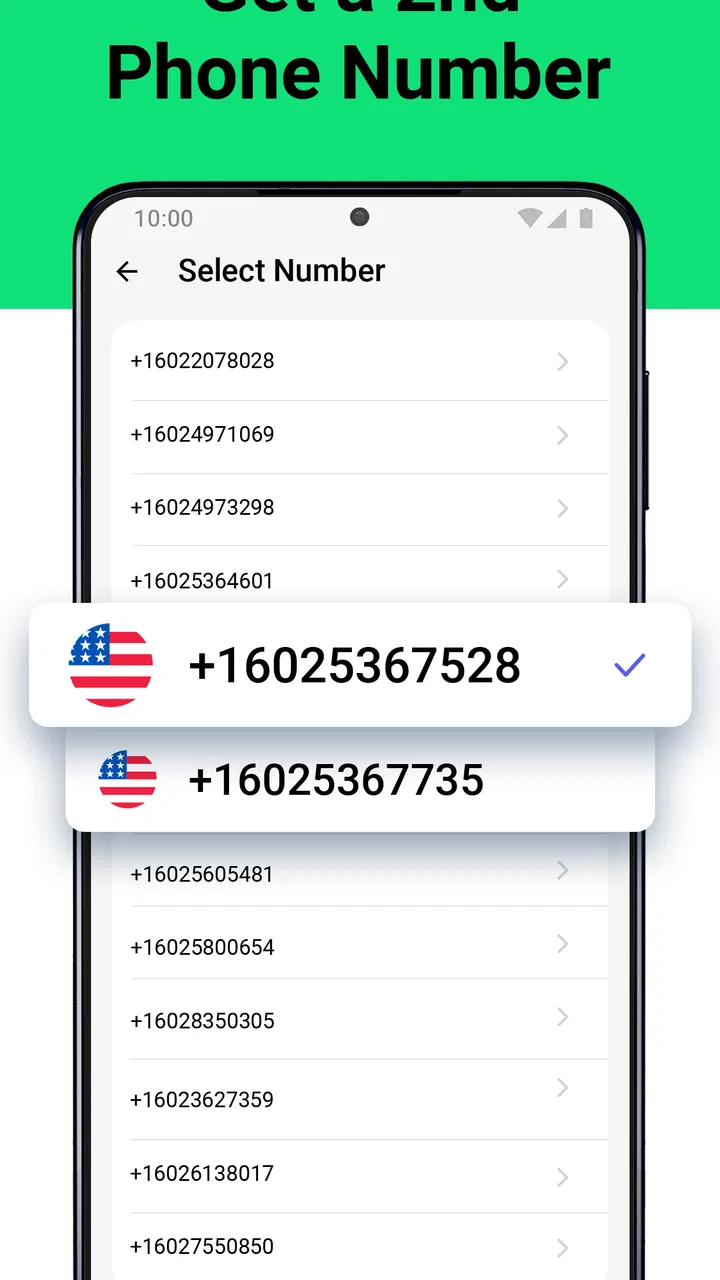
The core experience is centered on calling and texting worldwide with a private second phone line. I like that the app addresses both forms of communication instead of making me use one service for messages and another for calls. That makes the extra number easier to explain to someone else: they can contact me in the familiar ways, while I decide which line I want to share.
Still, I would not assume that every contact will treat the number exactly like a normal mobile number. People may be more comfortable calling a conventional carrier line, and some services may handle secondary or internet-based numbers differently. For ordinary person-to-person conversations, the concept is convenient. For account verification or services that enforce strict phone-number rules, I would test compatibility before depending on it.
Separate the line from my identity
A useful habit is to avoid mixing the second number into every part of my phone. I would save only the contacts that genuinely need access to it and keep a small note about why each person has that number. This prevents the extra line from becoming an unstructured duplicate of my main address book.
I would also tell important contacts which line to use. A second number only improves organization if people know where to reach me. A short message such as “use this number for project questions” is more effective than silently giving someone an unfamiliar line and hoping they understand the difference.
What I check before relying on it
Before making the app part of an important workflow, I would place a test call and send a test text to someone I trust. I would check whether incoming communication is easy to notice, whether replies appear where I expect, and whether the other person can call back without confusion. This small test is especially worthwhile when the line will be printed on a listing, shared with customers, or used while traveling.
I would also verify how the app behaves when I am busy, offline, or switching between networks. I am not suggesting a specific result beyond the basic experience; the point is that a second line should be tested in the conditions where I actually plan to use it. A number that works for casual texting may not be suitable for time-sensitive calls if I cannot reliably notice incoming activity.
Settings and habits that make the second line manageable
I would keep the line’s role visible in how I handle contacts and notifications, rather than trusting myself to remember why each person has it. A brief explanation when sharing the number can prevent missed replies and awkward callbacks. Those basics make it easier to build quicker patterns once the line becomes part of a regular routine.
Review the app’s permissions and notifications
When I install a communication app, I pay close attention to the access it requests and to the way notifications appear. I want incoming calls and texts to be visible without making the app noisier than my main phone line. If notifications are too easy to miss, the number becomes unreliable. If they are too frequent, I lose the very separation I created it for.
I would check the app’s notification behavior during setup and then revisit it after a day of real use. A setting that seemed fine during installation may feel different once several messages arrive. I also prefer to keep the second line’s alerts visually distinct from my primary messages, because that lets me recognize the type of communication before opening the phone.
Use contact labels instead of memory
One of the simplest advanced habits is labeling contacts according to the reason they have the number. “Marketplace,” “project,” or “travel” is more useful than relying on memory several weeks later. This is not a special feature I am attributing to the app; it is a repeatable way to work with a second line and avoid accidental oversharing.
If I stop using the number for a particular purpose, I can review those contacts and conversations together. That makes cleanup easier and reduces the chance that I will continue answering old requests through a line that was meant to be temporary.
Understand the cost before increasing use
The app is free, but it includes in-app purchases ranging from less than a dollar to just under sixty dollars per item. I would not treat “free” as meaning that every possible use is cost-free. Instead, I would begin with the exact communication need I have, see how well the basic experience fits, and only then consider whether a paid item is worthwhile.
This is especially important for people who want the number for occasional use. A second line can be excellent value when it prevents unwanted exposure of a personal number, but it may be poor value if I barely make calls or only need a number once. I would also avoid making a purchase before confirming that the app suits the recipient, country, and communication pattern involved.
Keep the purpose narrow enough to maintain
Experienced use is mostly about consistency. If I use the line for work, I answer work-related calls there. If I use it for online selling, I keep those conversations there. The more purposes I pile onto it, the less useful the separation becomes.
I would set a simple review habit: every few weeks, look at the conversations and ask whether the number still has a clear role. If the answer is no, I would stop distributing it widely. This protects the app from turning into a second general-purpose inbox that demands the same attention as my main number.
Think about privacy without overstating it
A private second line can reduce how often I share my primary number, which is a meaningful advantage. However, I would not confuse that with complete anonymity or total privacy. The people I contact still know the number I present to them, and any communication service should be treated with the same care I would give another online account.
For sensitive conversations, I would consider whether a normal call or text is the right channel at all. 2Number is useful for separating contact details, not for replacing careful judgment about what information I disclose.
Faster patterns for people who use it often
For frequent use, I would make first contact predictable: say what the number is for, agree on the best way to reach me, and give temporary conversations a clear next step. This reduces avoidable back-and-forth without pretending a second line is a full business system. Efficiency helps, but it is still worth weighing what the app cannot replace.
Create a repeatable first-contact routine
When I share the number with someone new, I would use the same short explanation every time: identify the purpose of the line and tell the person whether calls, texts, or both are preferred. This prevents the confusion that often comes with an unfamiliar number. It also makes the second line feel intentional rather than temporary or suspicious.
For a small business or side project, I could include that explanation in the first reply. For a classified listing, I might say that the number is for questions about the item and arrange a specific time for calls. These small boundaries reduce unnecessary back-and-forth and make it easier to stop using the line when the task ends.
Use the app as a filter, not just a duplicate
The strongest workflow I found is to make the second number a filter for situations where I do not yet want to open my personal communication channel. I can give it to a new contact, evaluate whether the relationship becomes useful, and then decide whether my primary number should ever be shared.
This is more practical than creating a second number for every person or project. The line becomes a first stage of contact. That approach is particularly helpful for people who receive messages from strangers, coordinate occasional services, or experiment with a new side business.
Keep conversations organized by outcome
For temporary communication, I would close the loop clearly. If a buyer has collected an item, if a contractor has finished a job, or if a short project has ended, I would stop treating that conversation as active. This sounds obvious, but a second line can accumulate unfinished threads because it does not have the same emotional importance as a personal inbox.
A practical method is to answer each conversation with one of three outcomes: continue, schedule, or finish. “Continue” means the contact remains relevant, “schedule” means I need a specific next action, and “finish” means I no longer need to keep the exchange active. This simple system makes the app more useful without requiring complicated tools.
Know when a second line is better than a second device
For many people, the app is more convenient than carrying another phone. I can keep one device in my pocket and still divide personal and secondary communication. That makes sense for occasional work, online listings, or a project that does not justify a full business setup.
A second physical device is still better in some cases. If I need completely separate batteries, accounts, staff access, or dependable operation independent of my main phone, 2Number is not a substitute for dedicated hardware. Likewise, a full business phone service may be a better fit if I need team features, formal call handling, or a polished customer-support workflow.
Compare it with ordinary alternatives
The usual alternative is simply sharing my primary mobile number. That is easier for recipients, but it removes the boundary that makes a second line valuable. Another option is using a second SIM or eSIM, which may provide a more traditional carrier arrangement but can involve device compatibility, carrier plans, and more setup. A separate phone offers stronger physical separation but adds cost and inconvenience.
2Number sits between those choices. It is lighter than another device and more private than immediately distributing my personal number, but it may not have the same carrier-level dependability or universal acceptance as a conventional line. I would choose it for flexibility and separation, not because it eliminates every limitation of phone communication.
Limits that matter before making it essential
My final check is whether the convenience is worth making this line part of an important routine. I would test it with the people I expect to contact, keep another route available for urgent matters, and avoid relying on it where compatibility must be certain. That distinction helps clarify which limits are practical deal-breakers and which are manageable trade-offs.
Do not make it my only critical contact method
I would be careful about using any secondary communication app as my sole route for urgent or essential matters. If a call is important enough that missing it could create serious consequences, I would provide a dependable alternative as well. The app can be a useful layer, but redundancy matters when communication cannot wait.
This is also why I would hesitate to use the number as the only contact for financial services, official records, or accounts that are difficult to recover. The issue is not that the app is unsuitable for every verification message; it is that important accounts deserve a contact method I know will remain accessible and accepted in the exact situation where I need it.
International use needs a practical test
The worldwide calling and texting focus is appealing to travelers and people who communicate across borders. Even so, I would test the number with the people and destinations I actually need before traveling or starting a remote project. International communication can involve different expectations about numbers, calling behavior, and message delivery.
For a planned trip, I would set up the line early, contact a friend in the destination country, and make sure I understand how I will notice replies. I would also keep a backup contact method. That preparation is more useful than assuming that a worldwide description automatically means every international scenario will behave identically.
Privacy is not the same as disappearing
A second number can protect my primary contact detail, but it does not make me invisible. I still need to think about who receives the number, what I say in messages, and whether I want to continue a conversation. If someone is harassing me or a situation feels unsafe, I would not rely only on changing communication habits inside the app; I would use the broader blocking and reporting tools available on my device or service where appropriate.
Watch for notification fatigue
The more successful the second line becomes, the more likely it is to attract messages. That can create a new problem: I may start checking two inboxes constantly. My solution would be to define checking windows for non-urgent communication and reserve immediate attention for contacts who genuinely need it.
This is one reason I would not recommend the app to someone who already struggles with too many messaging channels. The extra number solves a privacy problem, but it can create an attention problem if there is no plan for managing it.
Know who should skip it
I would skip 2Number if I need a formal business phone system, shared access for a team, guaranteed compatibility with every verification service, or a carrier-style line for essential calls. I would also think twice if I rarely need a second number, because the setup and ongoing attention may outweigh the benefit.
On the other hand, I think it is a sensible option for people who want one device with a separate contact identity. It is particularly appealing for sellers, freelancers, travelers, renters dealing with unfamiliar contacts, and anyone who wants a buffer between personal communication and new conversations.
My verdict after making the workflow deliberate
Second Phone Number - 2Number is most convincing when I treat it as a controlled front door rather than a second version of my entire phone life. The app gives me a practical way to call and text through another number, and its free entry point makes experimentation easy. The current version is 2.32.0, and the app supports devices running at least iOS or Android version 10, which places it within reach of many modern phones.
My recommendation comes with a condition: define the job first, test the line with real contacts, review the settings that affect attention, and keep a backup for anything important. Those habits turn a basic second-number idea into a useful system. Without them, the app can become another noisy inbox or a contact method I trust more than I should.
For casual privacy, temporary projects, and separating personal calls from everyday transactions, I would gladly suggest giving it a try. I would not present it as a complete replacement for a carrier line, a dedicated business service, or a second device. The best reason to install 2Number is not to collect another number, but to create a clear boundary around the one I already have.
After using it with that mindset, I see the app as a flexible communication layer with real practical value and understandable limits. If your situation matches that middle ground, Second Phone Number - 2Number can make sharing contact details feel safer and more organized without forcing you to carry another phone.
FAQs for Second Phone Number - 2Number
01What is Second Phone Number - 2Number used for?
Second Phone Number - 2Number provides an additional phone number that can be used for calls, text messages, and account registrations without replacing the number linked to your physical SIM card. It can be useful for separating personal and business communications, protecting your primary number when signing up for services, or managing conversations that you do not want mixed with your everyday contacts.
02Can I use 2Number to verify every app or online service?
Not necessarily. Although a second number may work for many registrations and verification messages, some websites and applications block virtual, VoIP, temporary, or recycled numbers. Support can also vary by country and by the service you are trying to access. Before relying on 2Number for an important account, check whether the platform accepts its number type and keep an alternative verification method available.
03Does Second Phone Number - 2Number require a subscription or payment?
The application may offer free features, but access to a number, calling, texting, extended validity, or additional services can depend on credits, in-app purchases, or a recurring subscription. Pricing and available plans may differ according to your region and the selected number. Review the purchase screen carefully, including renewal terms, trial conditions, and cancellation instructions, before confirming payment.
04Can I make international calls and send messages with 2Number?
International calling and messaging availability depends on the destination country, the number assigned to you, and the plan or credits connected to your account. Some destinations may cost more or may not be supported at all. The app normally displays applicable rates or package details before use, so verify the destination and expected charge first, particularly when contacting numbers outside your home country.
05Is a 2Number phone number permanent and suitable for important accounts?
A number obtained through Second Phone Number - 2Number may require periodic renewal, an active subscription, or continued account activity to remain available. If the number expires or is reassigned, you could lose access to messages and recovery codes sent to it. For banking, government services, or other critical accounts, it is safer to use a long-term number that you control reliably and to enable additional security options.
Pros
- Provides a separate number for calls and texts.
- Useful for keeping work and personal communications apart.
- Can help protect your primary number from unwanted contacts.
- Convenient for temporary registrations and online services.
- Available on mobile devices without needing a second SIM card.
Cons
- Many useful features may require a paid subscription.
- Number availability can vary by country and area code.
- Some services may reject virtual numbers for verification.
- Call and message quality depends on your internet connection.
- A second number may expire if the account is not used regularly.

Second Phone Number - 2Number
Gallery